
Start with the workflow, not the charger
Map demand in the smallest interval that matters to service. A daily average can hide a two-hour peak that empties the usable battery window or creates a charger queue. Record missions released, complete cycle time, natural dwell, required completion time and the robots that must remain available.
Separate energy time from productive time. A robot may be connected while a station waits for material, but that dwell is only free if the robot can still meet the next mission. Include charger travel and docking reliability; a short charge with a long detour may add little usable capacity.
The exact AMR documentation controls charging method, battery limits and charger compatibility. An OMRON LD Cart Transporter manual describes autonomous charging through its specified docking station. That is product-specific evidence, not a universal rule.
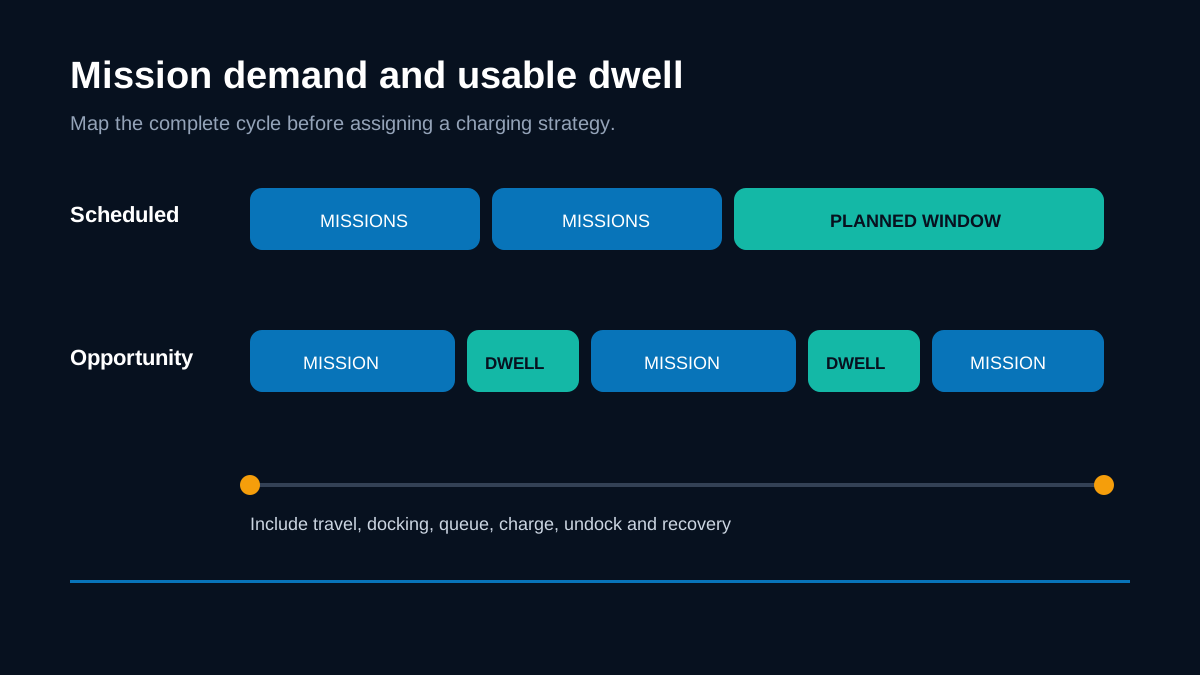
What scheduled charging changes
Scheduled charging reserves a defined window such as a shift change, meal break or planned production stop. It is easier to coordinate because the event is known, and it can keep robots away from chargers during peak work.
Its weakness is concentration. Several robots can reach the same break with similar state of charge. A delayed break, longer route or lower usable capacity can consume the reserve intended to reach the schedule.
- Confirm the robot can complete the pre-break mission mix inside its approved usable battery window.
- Verify the break supports the required recovery and that charger count, approach space and power support simultaneous demand.
- Define a missed-break fallback and confirm the remaining fleet can cover missions during charging.
What opportunity charging changes
Opportunity charging uses normal pauses—waiting at a workstation, a route buffer or a production stop—to add energy in smaller events. It can reduce dependence on one large charging block.
It also adds dependencies. Dwell must occur near the right charger, the robot must dock reliably, and dispatch must decide when charging is more valuable than the next mission. A queue can turn a useful pause into travel and waiting.
Do not assume all robots can share charging hardware. MassRobotics explains that its interoperability standard is not a shared-charger or safety system.
Compare both strategies on one capacity sheet
| Decision input | Scheduled | Opportunity | Evidence |
|---|---|---|---|
| Demand pattern | Protected low-demand windows | Repeatable natural dwell | Missions by interval |
| Charger demand | Concentrated peak possible | Frequent arrivals possible | Occupancy and queue |
| Travel loss | Fewer planned trips | Repeated detours possible | Travel and docking |
| Control | Schedule and exception rules | Dispatch balances work and charging | Fleet-manager logic |
| Recovery | Missed-window fallback | Dock or queue fallback | Degraded-case logs |
| Battery boundary | Must reach the window | Must permit partial-charge pattern | Exact documentation |
Do not turn the sheet into a universal charger-to-robot ratio. Calculate occupancy from tested event duration and arrival pattern, then add a charger-outage case.
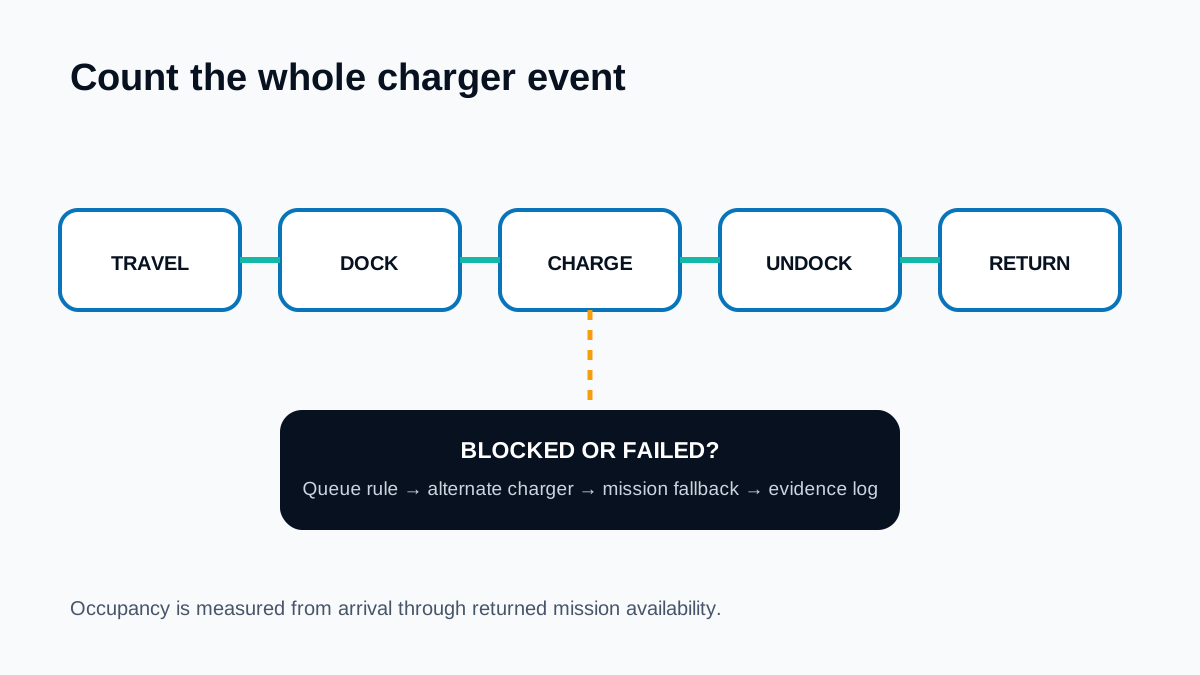
Test degraded cases before choosing
Test one charger unavailable during peak demand; a robot delayed by a blocked route; two robots requesting one charger; a shortened break; a charge that fails to start or ends early; and lower usable battery capacity than the initial assumption.
Keep safety acceptance separate from capacity. ISO 3691-4:2023 covers safety requirements for driverless industrial trucks and their systems, while its scope says power-source requirements are not covered. The plan therefore needs system-safety work plus separate robot, battery, charger, electrical and site documentation.
A hybrid strategy may be the right result
A site may use planned charging as the baseline and allow controlled opportunity events during long dwell. Another may use opportunity charging normally but reserve a scheduled recovery window before a peak.
Define trigger condition, permitted charger, mission priority, reserve, queue rule, fault response and evidence owner. These are project controls, not universal values. Validate them in the pilot.
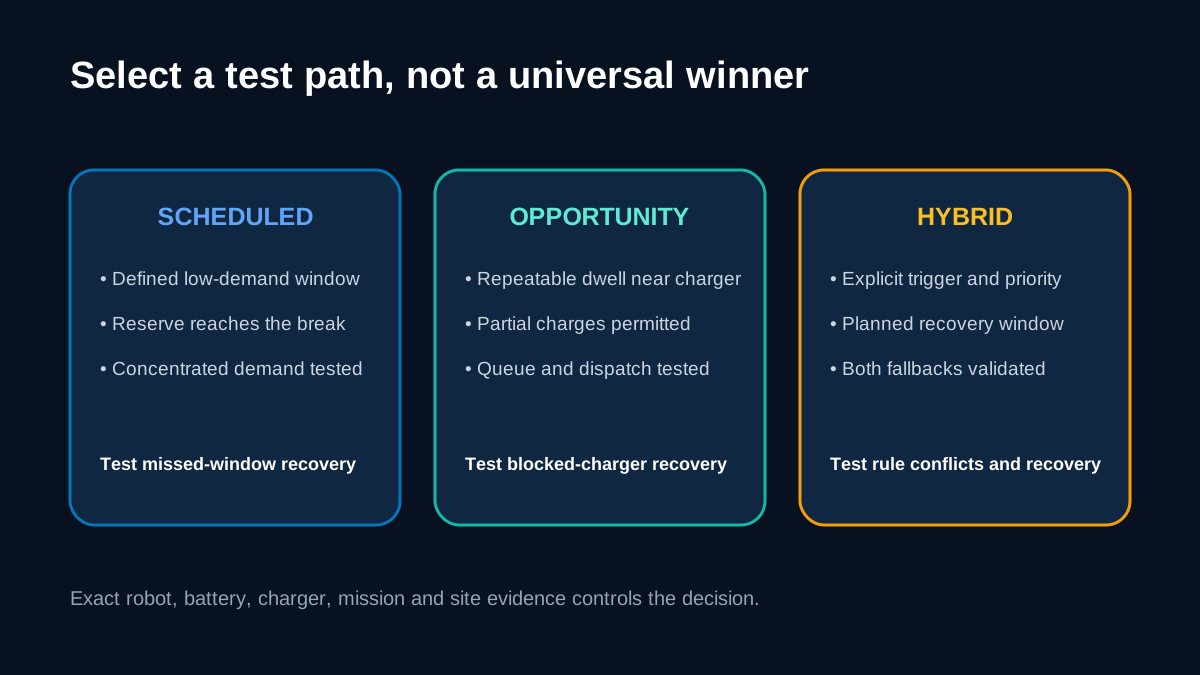
Prepare the charging brief
Provide the robot, battery and charger model and software version; mission count and cycle time by interval; payload, route and handoff conditions; measured dwell by location; documented usable battery window and limits; charger locations, electrical supply and approach constraints; dispatch rules; fault and recovery cases; and acceptance logs for queue, charge and returned availability.
Use the AMR fleet-sizing guide to keep charging inside the productive-capacity model. Review AMR platforms only after the workflow is clear.
FAQs
Is opportunity charging always better for multi-shift AMRs?
No. It helps only when repeatable dwell, compatible charging, reliable docking and dispatch logic add useful energy without delaying higher-priority missions.
Can an AMR use short charging sessions all day?
Only when the exact robot, battery and charger documentation permits that pattern. Do not infer suitability from another model or chemistry.
How many AMRs can share one charger?
There is no universal ratio. Model arrivals, docking, required charge time, travel, queues and the effect of a charger outage.
Should charging time be included in fleet sizing?
Yes. Exclude travel, docking, charging, undocking, queue and recovery time from productive availability when they remove a robot from missions.
What is the main risk of scheduled charging?
Several robots can require charging in the same window, and a missed break can consume reserve. Test simultaneous demand and recovery.
What should a charging pilot record?
Record mission demand, charger requests, travel, docking success, queue, charge duration, return-to-service time, faults and manual recovery with fixed definitions.
Sources and limitations
The cited documents define product-specific charging, interoperability and safety boundaries. This guide does not claim a universal runtime, charge time, battery reserve, charger ratio or fleet availability.
Build the plan around your mission profile
Share mission demand, routes, dwell, payload, charging hardware and degraded cases for a configuration review.
Discuss an AMR project