
AMR safety guide
AMR Safety Standards: ISO 3691-4 Site Checklist
Turn the applicable safety standard into a site-specific checklist before an AMR pilot, acceptance test or production handover.
An AMR safety review is a system review, not a checkbox for the robot alone. Start with the exact machine and attachment, then prove the operating zone, traffic behavior, load handoffs, abnormal cases and people-facing procedures under the conditions where the AMR will actually work.
Start with scope
ISO 3691-4 is a system reference, not a substitute for site assessment
ISO 3691-4:2023 specifies safety requirements and means of verification for driverless industrial trucks and their systems. Its examples include automated guided vehicles and autonomous mobile robots, and it notes that the operating zone has a significant effect on safe operation. That means the buyer still needs a site-specific assessment for floors, crossings, people, loads, interfaces and foreseeable misuse.
In the United States, OSHA says there is no robotics-specific OSHA standard. Applicable workplace duties remain, while ANSI/RIA R15.08 provides industrial-mobile-robot guidance for the robot and its system/application. Use the standards as the technical basis, then document how the delivered project meets local obligations.
Site readiness
Build the checklist around the real operating zone
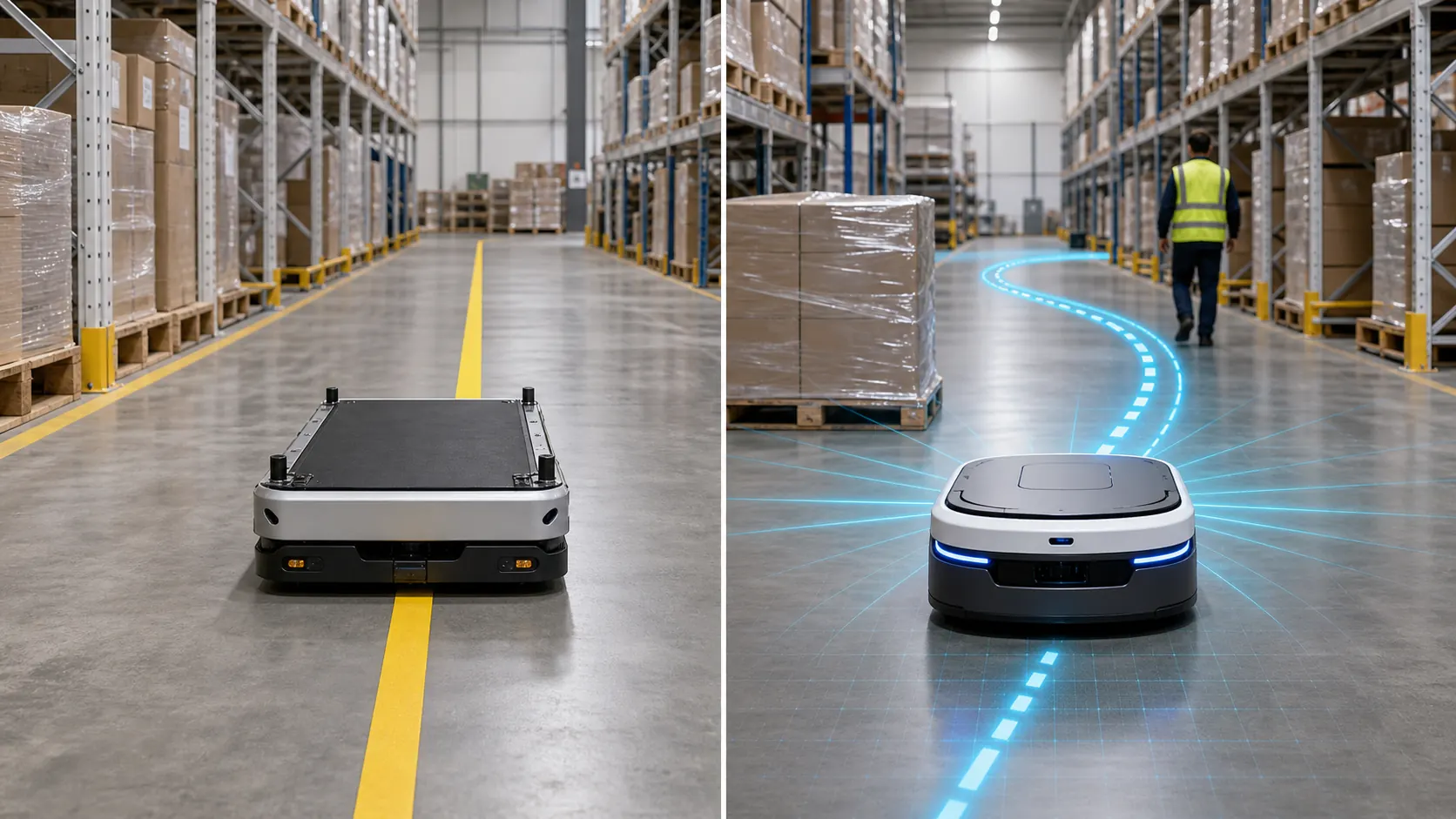
Walk the complete route with operations, safety, maintenance and the integrator. Record the normal path and the places where a person, pallet, door, lift or temporary obstruction changes the risk. The same AMR can require different controls in a quiet aisle and a mixed pedestrian zone.
| Control area | Evidence to collect before acceptance |
|---|---|
| Operating zone | Floor, edges, crossings, doors, lifts, lighting, pedestrians, emergency access and restricted areas are mapped. |
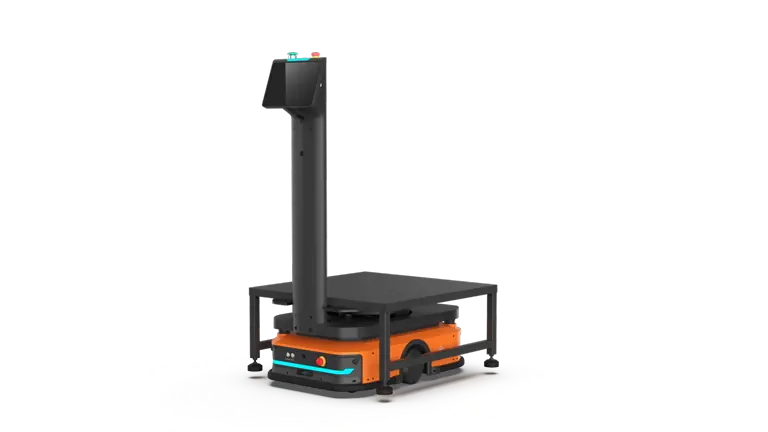
| Robot and attachment | Payload, dimensions, stopping performance, scanners, bumpers, top module and failure states are documented. |
| Traffic and people | Right-of-way, speed, crossing behavior, exclusion zones, manual overrides and recovery roles are agreed. |
| Load handoffs | Pickup/drop-off detection, stability, dropped-load response and workstation interfaces are tested. |
| Controls and evidence | Risk assessment, validation tests, training records, maintenance instructions and change control are retained. |
Treat the operating zone as a deliverable
Mark route boundaries, pedestrian crossings, emergency access, charging locations and recovery points on the same controlled drawing used for validation. A safety claim that cannot be tied to a location is hard to test or maintain.
Verification
Test normal, abnormal and recovery behavior
A useful acceptance plan tests more than an empty route. Include the highest intended payload, representative carriers, normal traffic, a blocked path, a missed handoff, a low battery, loss of network or interface confirmation, and a safe stop/restart sequence. Define who observes each test, what result is required and how an exception is closed.
- 01Verify detection, stopping and restart behavior at each crossing and interaction point.
- 02Verify load stability, pickup/drop-off confirmation and the response to a failed handoff.
- 03Verify manual recovery, maintenance access, isolation and emergency communication.
- 04Record software, map, speed and zone configuration versions with the test result.
Operations
Make handover and change control part of the safety case
Before production use, hand over the approved map, zones, traffic rules, load limits, inspection points, escalation contacts and training records. Keep a clear owner for software changes, route edits, new attachments and temporary construction changes. A new rack, door or workflow can alter the risk even when the AMR hardware is unchanged.
Link the safety file to your AMR project scope and quote, and use the robot platform pages to confirm payload and configuration assumptions before requesting a proposal.
Buyer questions
FAQs
Does ISO 3691-4 apply to every AMR project?
ISO 3691-4:2023 covers driverless industrial trucks and their systems, including many AMR and AGV examples. Confirm the exact scope, local adoption and any additional requirements for your machine, attachment and site.
Is a robot safety scan enough for acceptance?
No. The scan is one control. Acceptance should also cover the operating zone, traffic rules, load and attachment, interfaces, abnormal conditions, training, maintenance and evidence that the complete workflow performs safely.
Does OSHA publish one AMR standard?
OSHA states that it does not have a robotics-specific standard. U.S. projects still need applicable workplace rules and a documented risk assessment; standards such as ANSI/RIA R15.08 can provide relevant technical guidance.
When should the safety review be repeated?
Repeat it after changes to routes, loads, top modules, software, speed limits, doors, lifts, pedestrian controls, facility layout or maintenance procedures, and after incidents or near misses.
Sources
- ISO 3691-4:2023 - driverless industrial truck safety requirements and verification.
- ANSI/RIA R15.08-1 - industrial mobile robot safety requirements.
- OSHA robotics standards overview - U.S. regulatory context and referenced standards.
Ready to scope a safer AMR pilot?
Share the load, route, people flow, handoffs and site constraints so the first proposal includes the evidence your team needs.
Discuss your workflow