
AMR buying guide
Warehouse Automation Integrator or AMR Manufacturer: Choosing the Buying Route and Shortlist Questions
Choose the buying route that fits your project, then shortlist suppliers with questions that expose real capability.
Buy direct from an AMR manufacturer when the project is one well-defined workflow on a technology you have already chosen and your team can own the site and system integration. Bring in a warehouse automation integrator when the scope spans several systems, vendors or a layout change. Use a manufacturer-plus-integrator route when you want a specific robot platform without carrying the integration yourself. Then shortlist suppliers on evidence — comparable projects, who does the work in-house, which safety responsibilities they accept and what support they provide themselves.
Step 1
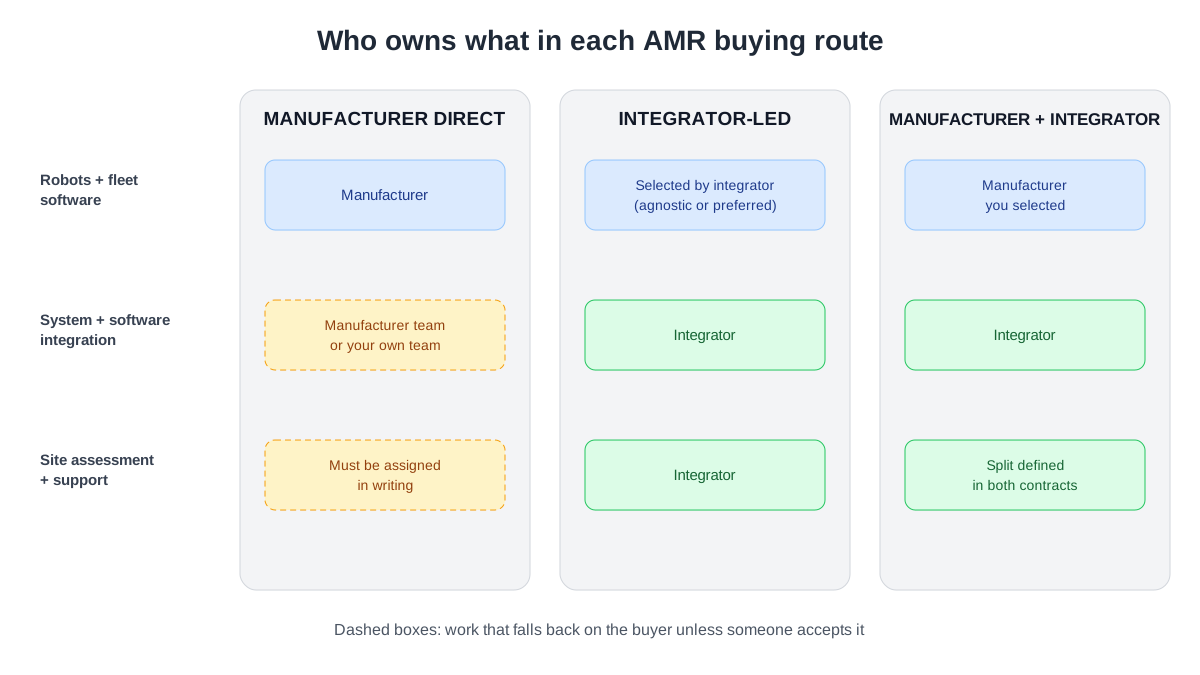
Three buying routes, and who owns what in each
MHI's Solutions Community describes four kinds of automation integration partner: consultant integrators, who usually work early, are typically vendor-agnostic and help prepare RFIs or RFQs; traditional warehouse automation system integrators, who design and manage full solutions including equipment, software layers, installation and post-go-live support; OEMs, who manufacture the core systems; and software, controls and component integrators, who handle the logic and interfaces that connect equipment to a WES or ERP.
For an AMR project, those roles collapse into three practical buying routes:
| Route | Robots and fleet software | Site, system and software integration | Fits when | Watch for |
|---|---|---|---|---|
| Manufacturer direct | The AMR manufacturer | The manufacturer's in-house team if it has one; otherwise your own team | One workflow, technology already chosen, few other systems involved | Manufacturers focus on their own product lines, so multi-vendor coordination may fall back on you |
| Integrator-led | Chosen by the integrator (brand-agnostic or from preferred vendors) | The integrator | Several systems, vendors or a layout or picking-method change | Ask whether the integrator is brand-agnostic or tied to preferred vendors |
| Manufacturer plus integrator | The manufacturer you selected | The integrator, under a split you define in writing | You want a specific platform but not the integration burden | Gaps between the two contracts; nobody owns an interface unless it is named |
The route changes who does the integration work; it does not make the work disappear. MHI notes that some OEMs have internal integration teams while others work alongside system integrators, and that an OEM alone may not be enough when the project involves multiple systems from different vendors or coordination between software platforms. For AMRs specifically, enVista lists the integrator's usual responsibilities as operational assessment, technology selection, proof of concept, workflow alignment, integration with ERP, WMS and AMR fleet software, system performance testing and growth planning. On a manufacturer-direct project, each of those still needs an owner.
Step 2
Match the route to your project, not the other way round
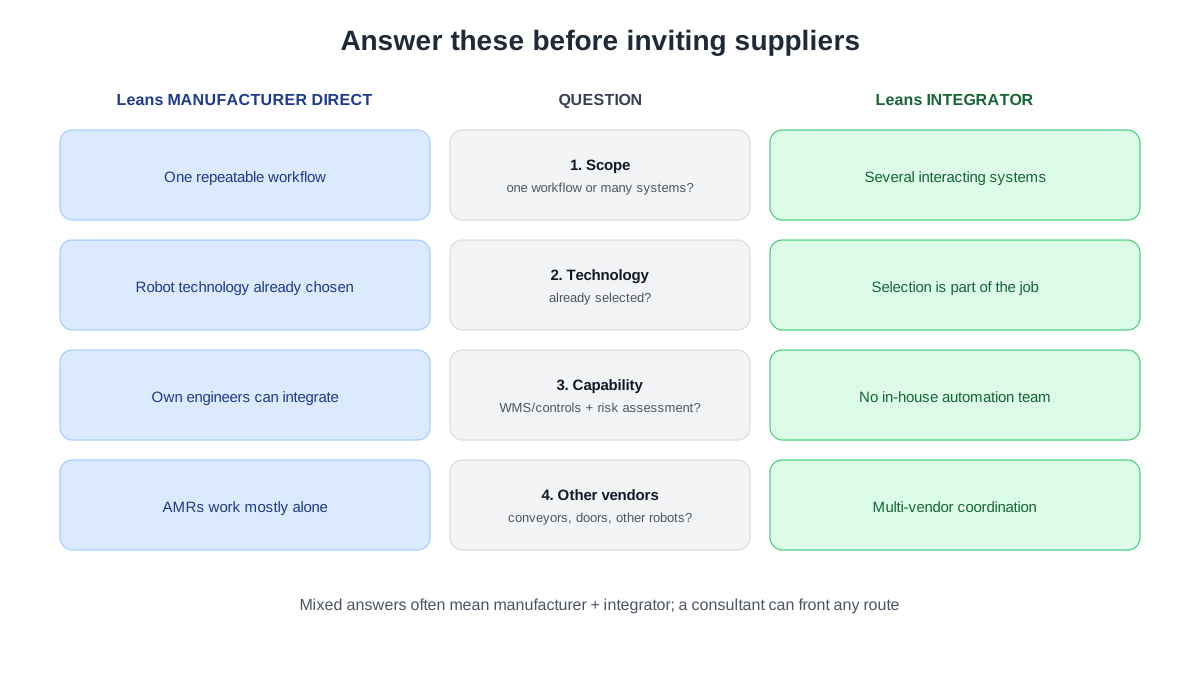
MHI's guidance starts with your own capability: if your team lacks in-house engineering or automation experience, early support from a consultant or full-service integrator is likely to help, while an OEM or software partner may be enough if you have already selected the technology. It maps targeted upgrades toward OEMs and full facility buildouts toward system integrators. Four questions turn that into a route decision:
- 1. Is this one workflow or several interacting systems? A single, repeatable transport job is a different project from one that touches conveyors, doors, a WMS and other robots.
- 2. Have you already chosen the robot technology? If yes, the manufacturer or a software partner may cover most of the scope. If not, technology selection is itself part of the work you are buying.
- 3. Can your own engineers own the WMS or controls integration and the site risk assessment? If not, those tasks belong to an integrator or to a manufacturer team that explicitly accepts them.
- 4. Will another vendor's equipment have to work with the AMRs? The more vendors involved, the stronger the case for someone whose job is coordinating them.
Several providers often share one project. MHI describes starting with a consultant, implementing with a system integrator and relying on a software firm to tie the system together as a common pattern, not an exception. A consultant is therefore an optional front end to any of the three routes rather than a fourth route.
Step 3
Settle who carries each safety responsibility
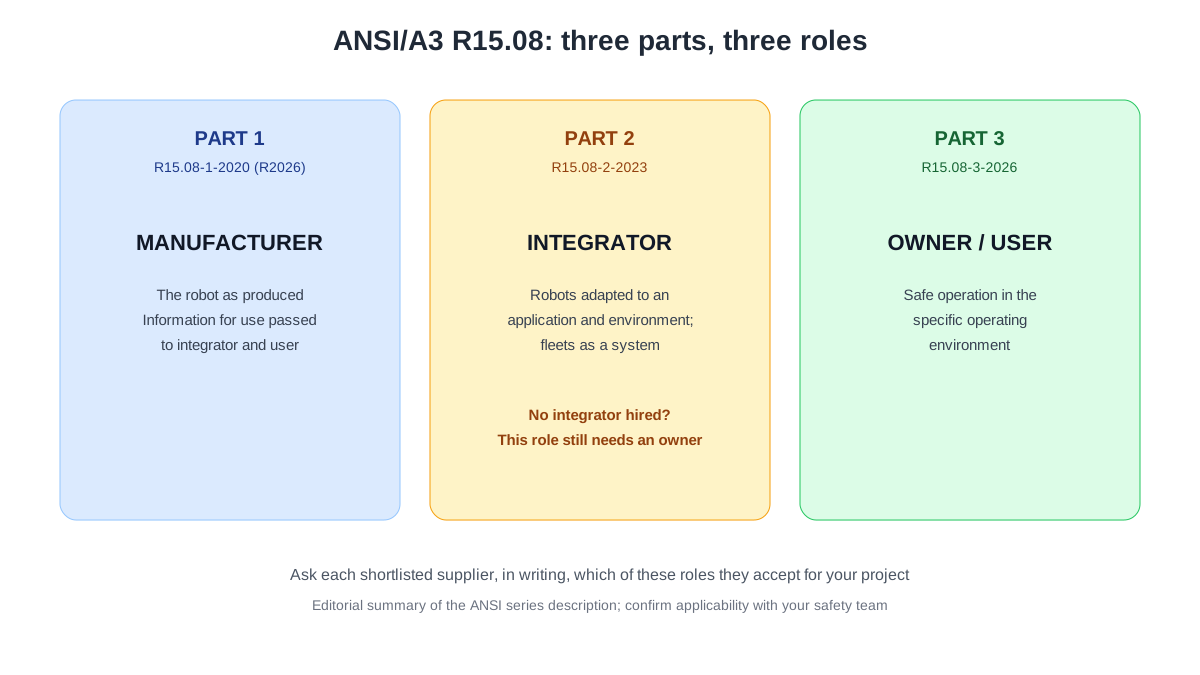
In the US, the ANSI/A3 R15.08 series splits industrial mobile robot safety across the lifecycle. Part 1 (ANSI/A3 R15.08-1-2020, reaffirmed 2026) covers the robot the manufacturer produces. Part 2 (ANSI/A3 R15.08-2-2023) covers robots adapted for particular applications and operating environments, and fleets operating as a system — the integration layer. Part 3 (ANSI/A3 R15.08-3-2026) describes user responsibilities for safe operation in the specific environment.
That split matters for route choice. A piece published by AMR manufacturer AutoGuide describes the manufacturer, integrator and owner as sharing responsibility for risk assessment, with the integrator responsible for assessing the whole workplace and designing the AMR system. It also notes that when the owner acts as the integrator, the owner must complete a thorough risk assessment before designing the system and deploying robots. On a manufacturer-direct route with no integrator, confirm in writing who is taking the integration role, because it may default to you.
Step 4
Shortlist questions that separate suppliers
These questions qualify the supplier, not the quote. Ask every candidate the same set and ask for evidence rather than a yes:
| Question | What a strong answer shows |
|---|---|
| Have you delivered a project of similar scale and workflow, and can we speak to that reference? | A named, comparable project and a customer willing to talk |
| Which parts of this work do your own engineers and software staff do, and which do you subcontract? | Where their expertise ends and which outside vendors they rely on |
| Will you assess our site and operating data before proposing a solution? | A site visit and throughput or SKU data review before any design is offered |
| Are you brand-agnostic, or who are your preferred technology partners? | An honest statement of the vendors they tend to specify |
| Which R15.08 role — manufacturer, integrator or neither — will you take on for this project? | A written answer, so the Part 2 integration role is not left unassigned |
| If the fleet mixes robot brands or third-party fleet software, what evidence covers our exact pairing? | Pairing-specific evidence rather than a general compatibility statement |
| Who is our named point of contact, and how are scope changes reported? | A dedicated contact and a defined change-reporting process |
| What service, preventive maintenance and spare-parts support do you provide yourselves after go-live? | Support they deliver directly, and what they pass to others |
The mixed-fleet question has its own depth: the AMR fleet management software guide explains why compatibility belongs to a specific robot-and-controller pairing rather than a standard named on a product page. Once you have a shortlist, comparing what each proposal includes and costs is a separate step: give every shortlisted supplier the same starting brief and scope worksheet from the AMR cost guide.
Scope
What this guide leaves to other pages
This guide stops at choosing a buying route and a shortlist. It does not compare quotes or project costs, which the cost guide covers; it does not rank AMR companies or manufacturers; and it does not define pilot acceptance tests. For the site survey, interface contract and pilot gate that follow supplier selection, continue with the AMR integration guide. No HiO-specific capability claim is made in this article.
Buyer questions
FAQs
Is it cheaper to buy AMRs directly from the manufacturer?
This guide does not compare prices. What the route changes is who owns the integration work — site assessment, system connections, testing and support — not whether that work exists. If the manufacturer does not take it on, it moves to your team or to an integrator, so compare what each proposal includes before comparing totals.
What does a warehouse automation integrator actually do?
A warehouse automation system integrator designs and manages the full solution: material flow analysis, equipment selection and sourcing, controls and PLC work, installation, operator training and long-term support. Depending on the firm, it may be brand-agnostic or work from preferred vendors, so ask which.
Can we use a consultant as well as an integrator or manufacturer?
Yes. MHI describes starting with a vendor-agnostic consultant, implementing with a system integrator and relying on a software firm for connectivity as a common pattern. A consultant typically helps define success up front and prepare RFIs or RFQs.
Which US safety standard applies to AMR integration work?
The ANSI/A3 R15.08 series: Part 1 covers the robot the manufacturer produces, Part 2 (R15.08-2-2023) covers IMR systems and applications — the integration layer — and Part 3 (R15.08-3-2026) covers user responsibilities. Confirm applicability for your site with your safety team.
Sources
- Types of Automation Integrators — MHI Solutions Community, July 31, 2025.
- ANSI/A3 R15.08-1-2020 (R2026): Industrial Mobile Robots Safety — ANSI Blog, September 10, 2026.
- AMR Manufacturer, Integrator, and Owner: What Are Your Safety Responsibilities? — AutoGuide Mobile Robots via RoboticsTomorrow, April 14, 2021 (manufacturer-authored).
- How Integrators Work in AMR Technology Deployment — enVista, July 1, 2025 (integrator-authored).
- How to Choose a Material Handling Integrator — Solutions in Action (integrator-authored).
Shortlisting AMR suppliers now?
Share your workflow, the systems the robots must work with and the route you are leaning toward, and ask HiO to state in writing which parts of the scope it would own.
Discuss your project scope