
AMR fulfillment guide
AMR Order Picking Workflow Choice: Person-to-Goods vs Goods-to-Person, and What Each Requires
Match your order profile, SKU spread, labor and layout to a person-to-goods or goods-to-person workflow, then see what each requires from your WMS and floor space.
Compare two workflow families when scoping AMR order picking: person-to-goods, where workers travel to stored inventory with robotic assistance, and goods-to-person, where equipment brings inventory to a picking position. Use order profile, SKU spread, labor position and floor layout as a project checklist, then ask the supplier to validate the proposed workflow against those inputs. A headline throughput number alone does not establish fit.
Step 1
Two workflow families: person-to-goods and goods-to-person
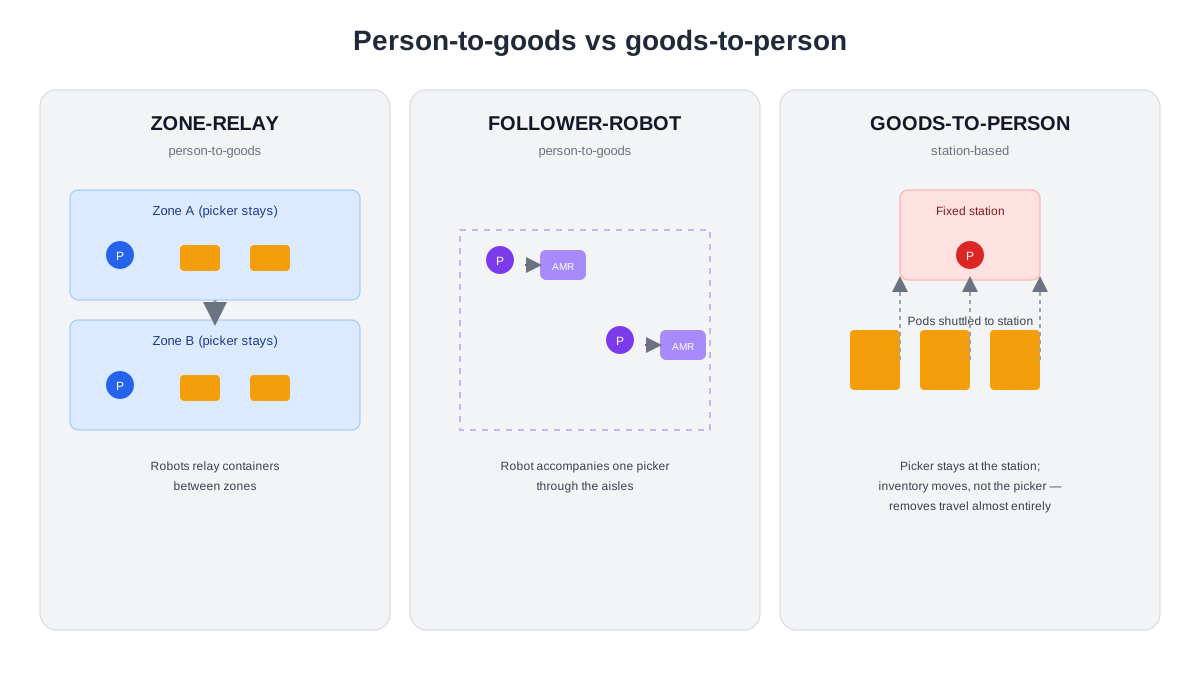
Person-to-goods AMR picking keeps inventory at its pick locations while workers move to it. Service Robot Co. and inVia describe zone-based assistance in which a worker meets an AMR in an aisle and the robot carries picked items onward. For this comparison, zone-relay picking means an illustrative design where pickers work in assigned zones and AMRs carry containers between zones; follower-robot picking means a proposed robot-picker arrangement where the robot accompanies a picker and carries their tote or cart. These labels describe the designs being compared here, not an exhaustive industry taxonomy or a claim that every supplier offers both.
Goods-to-person (G2P) brings inventory to a picking position. In the rack-based AMR design considered here, robots bring racks or pods to a workstation. Other goods-to-person designs can move totes or use different equipment, as inVia and Mecalux describe. The distinction is where the picking happens; it does not establish a universal throughput advantage or require the picker to remain motionless.
For a zone-relay proposal, ask how containers and work are assigned across robots and pickers. For a follower-robot proposal, ask how the robot-picker assignment, walking, tote changes and waiting affect output. Validate those constraints in the proposed operating sequence rather than assuming that one arrangement scales better or is easier to deploy.
Step 2
Profile your orders before you pick a workflow
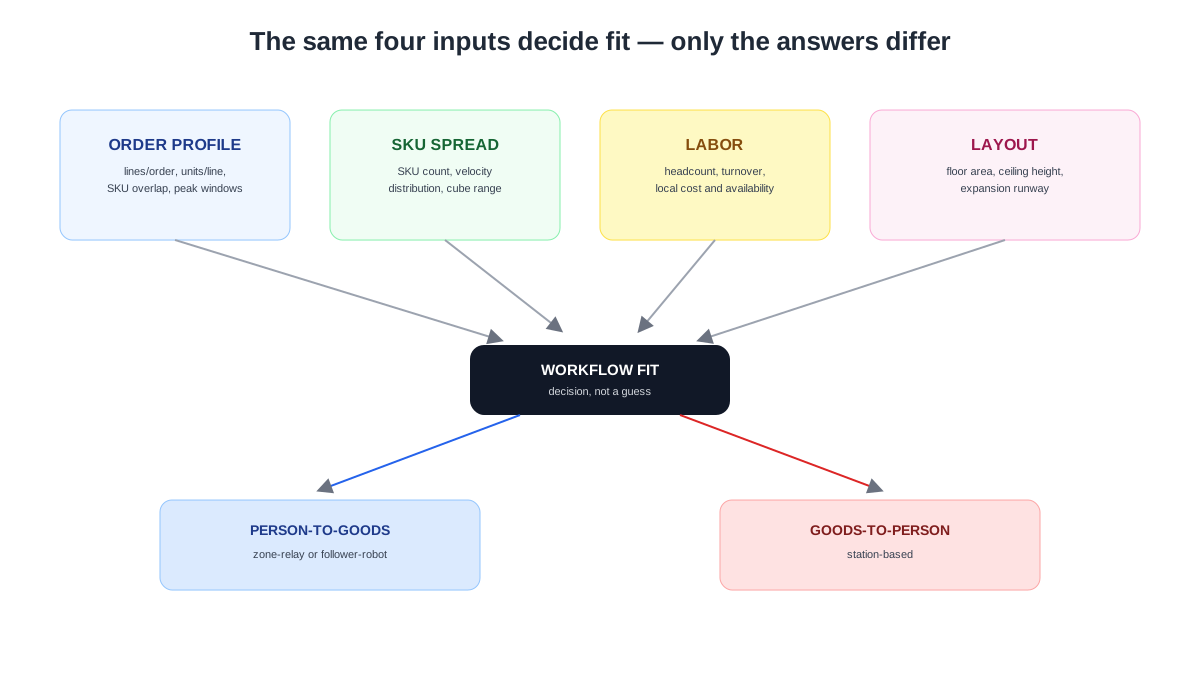
Start with the following project inputs. This is an engineering decision checklist, not a validated scoring model or a complete list of requirements:
| Input | What to capture | Why it changes the answer |
|---|---|---|
| Order profile | Lines per order, units per line, SKU overlap between orders, peak-day/peak-hour concentration | A daily average hides the busiest sustained period a workflow actually has to serve |
| SKU spread | Total active SKU count, velocity distribution (fast vs slow movers), cube/size range | Check the proposed rack or tote capacity, item fit and replenishment plan against the actual SKU mix |
| Labor | Current headcount, turnover, local labor cost and availability | Compare the proposed walking, station, replenishment and exception-handling tasks with available staffing |
| Layout | Available floor area, ceiling height, column spacing, expansion runway | Check the rack-based design’s storage, workstation and charger areas, or the person-to-goods design’s aisle routes |
Use the inputs together. Ask the supplier to show how SKU size and velocity affect storage and replenishment, how peak order demand affects picking and packing, and how the proposed equipment fits the measured building. Treat a mismatch as a design question to resolve before comparing quotes.
Step 3
Throughput and cost: what vendors report, and what to verify
Goods-to-person changes the travel task by bringing inventory to a picking position, but that mechanism alone does not establish a pick rate for your operation. Before using a supplier’s throughput comparison, ask what was counted (items, order lines or completed orders), whether the rate is per worker, per station or system-wide, the measurement period, the manual baseline, and whether replenishment, waiting and exceptions were included. Compare against your own order profile and SKU mix on the same basis.
Do the same for cost and deployment scope. Service Robot Co. positions its goods-to-person comparison as a higher-investment option, while inVia and the StreamTech/Geek+ interview describe mobile goods-to-person approaches that use or adapt existing infrastructure. Those vendor descriptions do not establish a universal cost or deployment-speed ranking. Obtain quotes for the actual racks or totes, workstations, chargers, software interfaces, installation and operating tasks in each proposal, then validate throughput and cost against your order profile and SKU spread.
Step 4
What each workflow demands from WMS wave release
Check how the proposed workflow receives and releases work. Helm WMS identifies picker count, average lines per order, pick-location density and packing capacity as wave-size inputs; Extensiv describes grouping and scheduling work around characteristics such as shipping priorities and zones. Use those as discussion inputs if the proposal uses waves. They do not establish that every AMR workflow must use wave release or that a particular WMS supports the required coordination.
For a zone-relay or follower-robot proposal, ask how the WMS, WES or robot controller assigns orders to zones and pickers. For a rack-based goods-to-person proposal, ask which system coordinates rack arrival, station workload and queues. These are engineering acceptance questions, not claims about every controller architecture. Confirm the interface responsibilities and demonstrate the required operating sequence with your providers before committing to a workflow.
Step 5
What each workflow demands from the floor
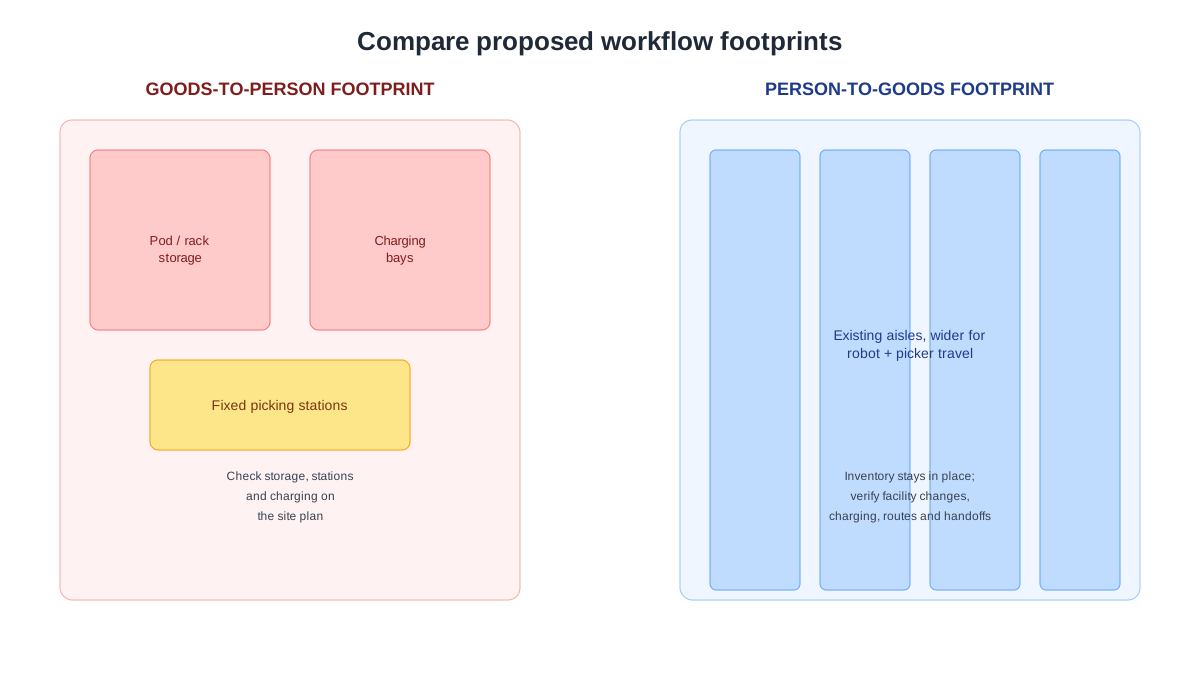
For the rack-based goods-to-person design considered here, mark the proposed rack or pod storage, workstation and charger areas on a measured floor plan. Service Robot Co. describes dedicated storage and picking stations; the StreamTech/Geek+ interview identifies workcells and AMR chargers in its design. Verify the actual storage arrangement, access and circulation requirements for the chosen system rather than assuming that all goods-to-person systems need the same new footprint.
For the person-to-goods proposal, mark robot and picker travel routes, container handoffs, charging and any proposed zones. Inventory remains at the pick locations in this model, but verify whether the supplier requires storage, aisle or other facility changes. Check route clearance and traffic handling against the equipment and site assessment; this comparison supplies no universal aisle-width or floor-area formula.
A floor-planning check for either proposal: use your SKU sizes, velocity spread and peak-period operating plan when checking storage, workstations, charging and routes. Ask the supplier to reconcile the demonstration layout with your measured site and expected traffic. This is a design review recommendation, not a ranking of observed mistakes.
Scope
What this doesn't cover
This article is scoped to the workflow-choice decision itself — it does not restate everything you'll need once that decision is made. It does not cover AMR ROI and payback math (see AMR ROI Calculation), how many robots the chosen workflow needs (see How to Calculate AMR Fleet Size), the general site-survey-to-pilot-acceptance integration process (see AMR Integration Guide), or manufacturing line-side replenishment triggers and buffers, which are a different application entirely (in-plant line feeding, not warehouse order fulfillment). No HiO-specific product or compatibility claim is made anywhere in this article.
Buyer questions
FAQs
Which workflow fits a lower-SKU-count, high-order-volume operation?
Include goods-to-person in the options to evaluate, then ask whether the actual SKU sizes, storage and replenishment design can serve the sustained and peak order profile. Compare the proposed staffing, layout and quoted operating scope before choosing; SKU count and order volume alone do not establish the best fit.
Can person-to-goods and goods-to-person coexist in the same facility?
Mixed picking methods are possible: Mecalux describes several storage systems with different operating principles in one warehouse, each for a product type. That supports considering a mixed design, not a claim about how frequently facilities combine AMR workflows. Validate SKU allocation, handoffs, software responsibilities and traffic for the proposed combination.
Does adding either workflow require replacing our WMS?
Whether replacement is required depends on the capabilities and interfaces of your existing WMS or WES and the proposed robot controller. Ask your providers to validate order release, inventory updates, zoning or station coordination, and exception handling for the chosen design. This article makes no compatibility or replacement-rate claim for a particular system.
What floor-planning checks should teams make when choosing a workflow?
Check the supplier’s layout against your measured floor plan, SKU sizes and velocity spread, and peak-period staffing and traffic. For a rack-based goods-to-person proposal, review storage, workstation and charger areas; for person-to-goods, review routes and handoffs as well as charging and any required facility changes. Validate the actual design rather than treating a demonstration layout as site approval.
Sources and limitation notes
- Goods-to-Person vs. Person-to-Goods: Choosing the Right AMR Picking Strategy — Service Robot Co. (https://servicerobotco.com/blog/picking-robots-goods-to-person-vs-person-to-goods-amrs) — vendor description of workflow mechanics and its own infrastructure/cost positioning; not an independent benchmark or a universal cost ranking.
- Goods-to-Person vs. Person-to-Goods Automation — inVia Robotics (https://inviarobotics.com/blog/goods-to-person-vs-person-to-goods-automation/) — vendor descriptions of rack-to-person, tote-to-person and zone-based smart-cart picking; product-specific claims are not generalized to HiO or other suppliers.
- Order Picking Methods: Goods-to-Person, Person-to-Goods and Combinations — Mecalux (https://www.mecalux.com/warehouse-manual/order-picking/goods-to-person) — general definitions and the possibility of mixed picking methods, not evidence of AMR adoption frequency.
- How to Know if You Are Right for Goods to Person and What Are Those Qualifiers? — StreamTech / Geek+ interview (https://streamtecheng.com/resources/articles/how-to-know-if-you-are-right-for-goods-to-person-and-what-are-those-qualifiers/) — vendor-specific workcell, charger and operating-input descriptions; not a guarantee for another system.
- What Is Wave Planning in a Warehouse Management System (WMS)? — Extensiv (https://www.extensiv.com/blog/what-is-wave-planning) and Wave Release — Helm WMS (https://helmwms.com/glossary/wave-release) — general wave-planning inputs, not verification of any particular WMS/AMR interface.
- Original pages above were retrieved on 6 October 2026 UTC. They support only the stated mechanisms and scoped vendor descriptions. The four-input checklist, throughput-comparison questions and floor/software checks are editorial engineering recommendations, not vendor-measured results. No quantitative performance benchmark, cost ranking, deployment timeline, adoption-frequency claim or HiO-specific product/compatibility claim is made here.
Ready to scope your fulfillment workflow?
Share your order profile, SKU spread, labor position and floor layout so the first proposal reflects your own workflow-fit reasoning, not a generic reference case.
Discuss your workflow